
Syracuse and the surrounding New York area
Repiping and Interior Supply Pipe Replacement in Syracuse
Work out whether the supply piping inside your house has narrowed or corroded enough to replace, and how much of it actually needs to go.
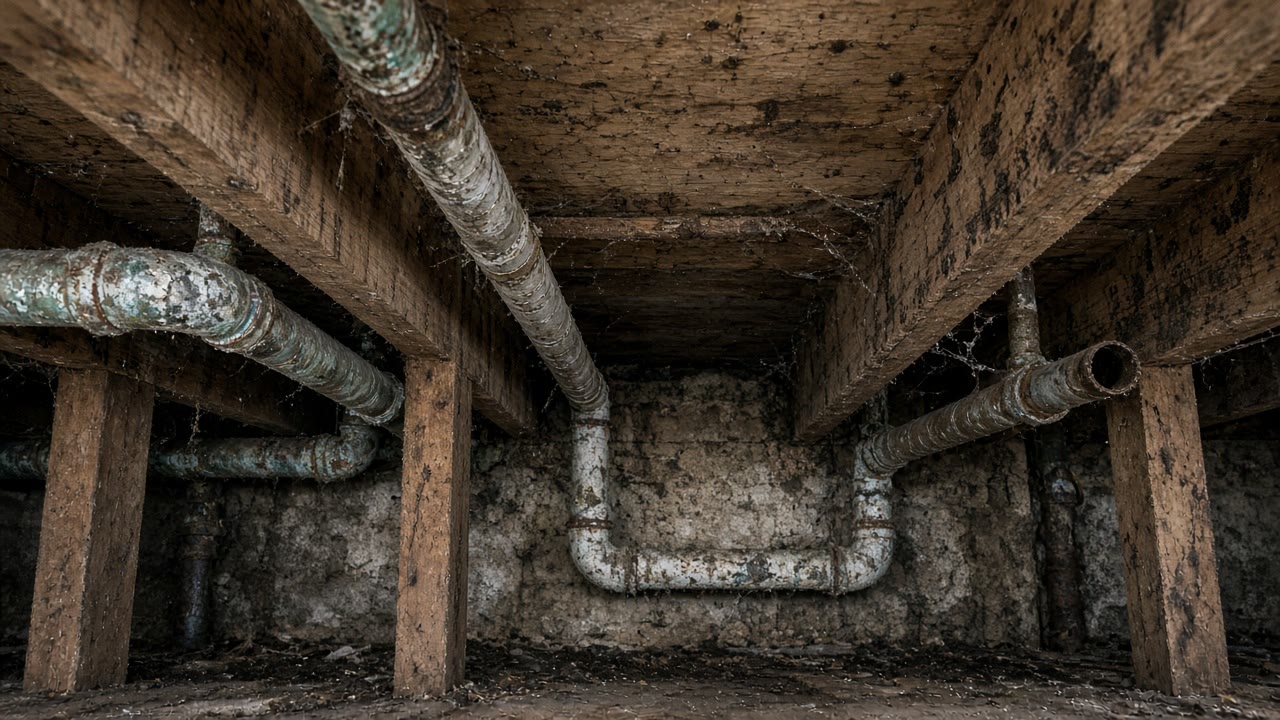
Repiping quote
The useful repipe quote says how much of the house actually needs doing, not just what a whole house costs. Tell us what the water is doing and roughly when the house was built, and we will put you in front of licensed, insured contractors who look at the pipe before they price it.
Would you rather talk it through? Call (315) 640-3590, answered 24/7.
$100 off your first job
Credited by us on your first booked job.
- One credit per customer per property, on your first booked job.
- Valid through December 31, 2026.
Mention this offer when you book. Full terms.
Supply piping inside the foundation wall
Repiping is replacing the hot and cold supply piping inside the foundation wall, from the shutoff where the service enters to the stop under each fixture. Galvanized steel is the reason most of it happens here. It rusts from the inside, the bore closes up over decades, and the symptoms arrive slowly enough that people redecorate around them: pressure that faded, rusty water first thing in the morning, one upstairs fixture that trickles. Copper installed before 1986 is a different question, because the pipe may be sound while the solder at the joints is not. This is also the side of the wall where the law relaxes. Onondaga County lets an owner occupied single family homeowner take out a permit and do interior plumbing work themselves, subject to conditions, which is the opposite of the rule that applies to the pipe in the front yard.
- Whole house repiping in copper or PEX, hot and cold, from the inside shutoff to every fixture
- Partial repiping of the original runs where a previous remodel already replaced part of the house
- The horizontal basement main, which is usually where galvanized closes up first
- Risers to an upstairs bathroom where flow faded on one floor and not the other
- Rerouting pipe out of unheated crawl spaces and exterior walls, which the state code names as places supply pipe should not be
- A pressure reducing valve where incoming pressure runs above 80 psi
- The two customer owned shutoff valves the water authority requires, inside the wall and at the meter
- Isolation valves added so one fixture can be worked on without shutting the whole house down
- Lead solder joints on pre 1986 copper, which replacing a service line does nothing about
- Disinfection of altered, extended or repaired potable lines before the house goes back into use
- Sealing and patching the openings cut through walls, floors and ceilings
What moves a repiping quote
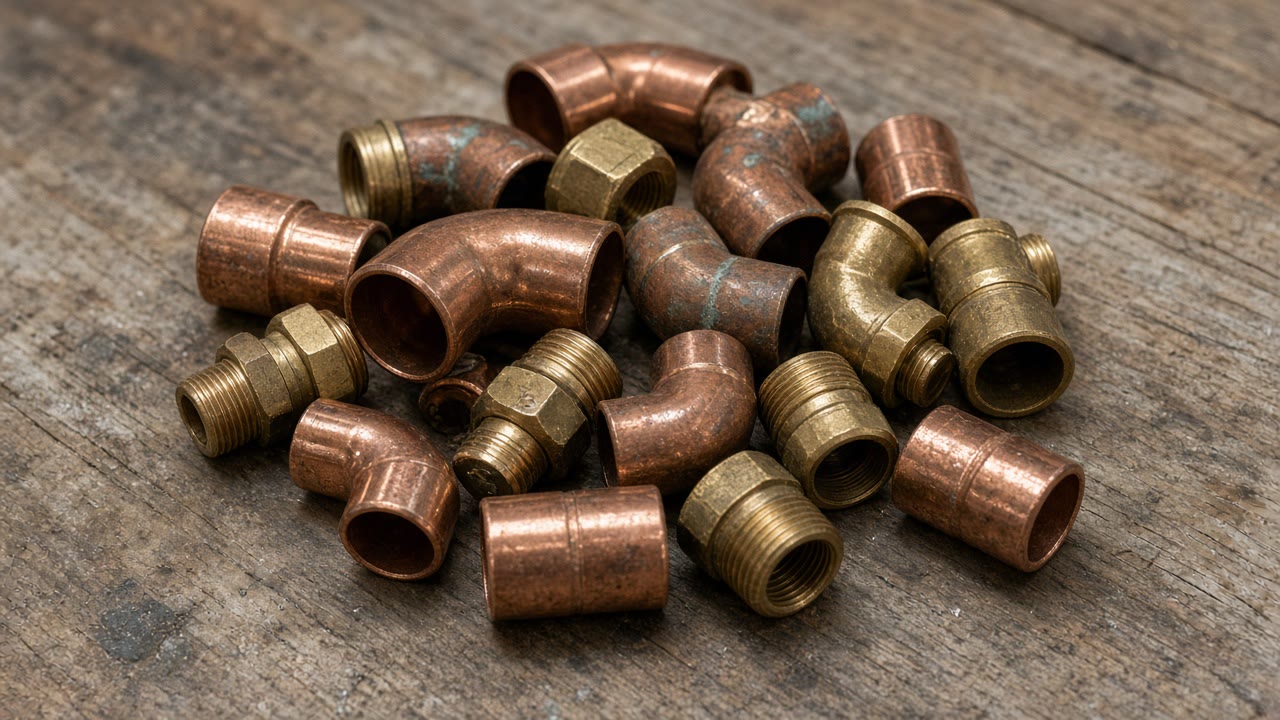
Most of the price is access and evidence rather than pipe. What the house is made of decides how much has to be opened, and what is already known about your street decides how much needs replacing at all.
When the house was built
The Census puts the median year of construction in the City of Syracuse at 1948, with 43.1 percent of its 67,601 housing units built in 1939 or earlier and 85.5 percent before 1980. A median of 1948 means the typical city house predates copper as a standard and predates the 1986 lead solder ban by four decades, so galvanized supply piping and lead solder joints are age appropriate rather than unusual. The villages run older still: East Syracuse, Liverpool and Skaneateles all sit at a 1938 median, and Solvay at 1947 with 91.4 percent of its housing built before 1980.
What the service line inventory already says about your street
Galvanized requiring replacement is a specific classification: the pipe was once fed by lead and now has to go. Liverpool village has the highest rate in the metro at 16.4 percent of records, Salina town has the largest count outside the city at 905 lines, Camillus village runs at 16.3 percent against a fraction of that in the surrounding town, and North Syracuse carries 404 galvanized records across its two localities. Where the pipe at the curb went in as galvanized, the pipe on the basement wall usually did too, which makes a free public record a real clue about the inside of your house.
What the pressure is doing on the way in
High incoming pressure is the quiet cause of banging pipes, weeping joints and short fixture lives, and it is not a preference. Section 5.4.H of the county requirements states that where line pressure on service pipes exceeds 80 psi in OCWA territory, an approved pressure reducing valve must be installed on the inlet side of the meter. A gauge on a hose bib costs a few dollars and tells you whether the valve you need is already there, already failed, or was never fitted.
How much of the house has to be opened
You are paying for access more than for pipe. Plaster and lath costs more to open and to make good than drywall, a finished basement ceiling hides the run that is easiest to reach, and a house on a slab has fewer routes than a house with a full cellar. The county makes the license holder responsible for sealing and patching any opening their own installation leaves in a wall, floor or ceiling, unless there is a written agreement that the owner will do it, so settle who closes the holes before the work starts rather than at the final bill.
Whether it is one dwelling or two
A duplex is a different permitting job from a house. Onondaga County requires a plan review before a permit is issued for all commercial buildings and multi family dwellings, with architectural floor plans, plumbing design drawings showing waste, vent, hot, cold and circulation piping, and a code summary. There is a threshold under it: state Education Law exempts single family residential buildings of 1,500 square feet or less and alterations costing less than 20,000 dollars from needing stamped drawings by a registered architect or engineer. Below the line you avoid a design cost and a delay. Above it, budget for both.
Where the existing pipe runs
Section 305.4 of the Plumbing Code of New York State says water pipes shall not be installed outside a building, in attics or crawl spaces, concealed in outside walls, or anywhere subject to freezing, unless adequate provision is made by insulation or heat or both. A supply run buried in an exterior wall is a code problem before it is a freeze problem, and rerouting it out of there is often the most valuable part of a repipe even though nothing about it shows afterward.
Whether the discoloration is at every tap or only the hot
This decides whether you are looking at a repipe at all. OCWA's own procedure for dirty or rusty water is to run one cold tap for 10 to 15 minutes with the aerator removed, and explicitly not to run the hot first, which would pull sediment into the tank. Rust on the cold side throughout the house points at the supply piping or the street. Rust on the hot side alone points at the water heater, and white granules that look like powdered soap point at a dip tube rather than at any pipe in the building.
All of it, or the runs that have actually closed up?
That is the difference between two very different numbers, and it is answerable in an afternoon.
How a repipe is scoped and run
Measure the pressure, then the flow at the worst fixture
Static pressure at a hose bib and flow at the fixture that complains are two different numbers, and the gap between them is the diagnosis. Good pressure with poor flow is a bore that has closed up or a blocked aerator. Poor pressure everywhere points upstream, at the service line, the meter, or a pressure reducing valve that has failed closed.
Identify what is actually on the wall
The pipe where the service enters and the first few feet of the basement main tell you the era of the house, and the state inventory record for your address often tells you what went in at the curb. Galvanized, copper with lead solder, copper with lead free solder and plastic all behave differently and fail differently, and no useful scope exists until somebody has looked at the pipe rather than at the house.
Decide how much of it needs to go
A whole house repipe and a replacement of the corroded horizontal runs are very different jobs, and the second one is often enough. Where a bathroom was remodeled in the 1990s that branch is probably already copper. The honest scope is the original runs plus whatever the new work has to tie into, not a number picked because it is simpler to quote.
The permit, and who takes it out
Inside the house a homeowner may do this work under their own permit, and the conditions are specific: apply in person, prove the property is an owner occupied single family dwelling, submit the New York State Workers Compensation Board WC/DB-100 affidavit, bring plans showing lines piped and sized to code, answer questions on the work, and only the individual homeowner may install it. Where a contractor does the work, only a holder of a county Certificate of Competency may obtain the permit, and obtaining one on behalf of somebody else is an offense in its own right.
Isolate, run the new pipe, keep it out of the cold
The house comes off the water at the first valve inside the wall, not at the curb box, which the water authority reserves to its own staff. New runs are routed through conditioned space wherever the layout allows, which is what section 305.4 is asking for, and isolation valves are worth adding while the walls are open because they are cheap now and expensive later.
Inspection before anything is closed in
The county's permit conditions require the inspection to happen before the work is covered, and this is the step that gets rushed when a drywall crew is booked. New pipe behind new plaster that no inspector has seen is an unpermitted alteration on your property, and it surfaces at resale or on a claim rather than on the day.
Disinfect before use
Section 5.5.B of the county requirements states that all newly installed potable lines, and any parts of an existing system that have been altered, extended or repaired, shall be disinfected before use. It is a short step, it is rarely mentioned in a quote, and it is a fair thing to ask about when you are comparing two prices that otherwise look the same.
Patch, make good, and close the permit
Sealing and patching the openings is the license holder's responsibility unless you agreed in writing to take it on, and the county wants it done before the final inspection. Finish carpentry, tiling and decorating are a separate trade and a separate budget, and knowing which of the two you are buying prevents the most common argument at the end of a repipe.
What repiping looks like
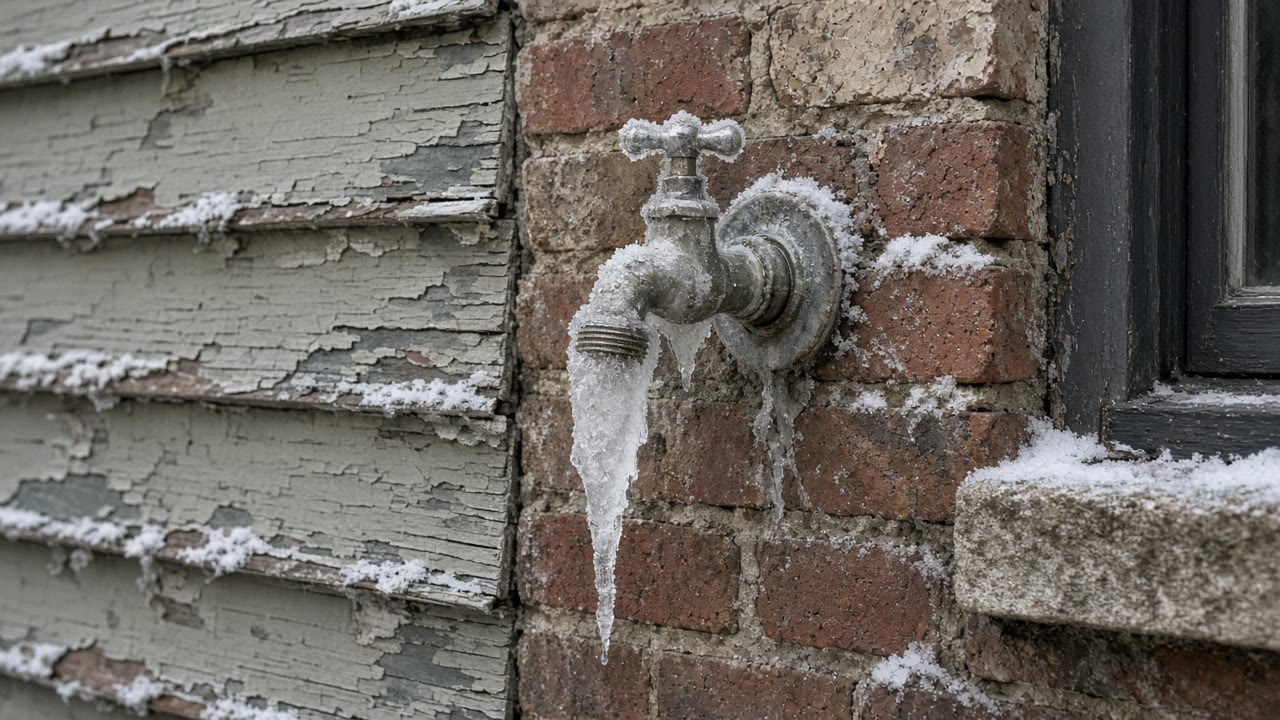

How far a repipe goes, and what it leaves alone
When you may not need this at all
- Low pressure at one fixture is a fixture problem far more often than a pipe problem. A blocked aerator or a failed supply stop is an in kind replacement that the county says needs no permit at all. Unscrew the aerator and rinse the screen before you price a repipe.
- Rusty water at every tap after a main break is usually the street rather than the house. OCWA's published procedure is to run one cold tap for 10 to 15 minutes with the aerator off, and not to run the hot first. Give it the full quarter hour before concluding the problem is your plumbing.
- White particles that look like powdered soap are a water heater part, not your piping. OCWA attributes them to the plastic dip tube breaking down, most likely in heaters manufactured between 1993 and 1996.
- In Clay, Cicero and Jamesville the evidence argues against repiping as a first answer. Clay has no confirmed lead service line at all on the state inventory and a 1978 median build year, Cicero has three and a 1980 median, and every identified line in Jamesville is non lead. A supply complaint in those towns is more likely a valve, a fitting or the heater than the original piping.
- A house that is already copper throughout rarely needs repiping. If it was piped before 1986 it may still carry lead solder at the joints, and EPA's position is that lead free means a weighted average of 0.25 percent rather than none, so the useful next step there is a water test rather than opening walls.
- If your street is in the city lead replacement program this year, it is worth sequencing interior work after the service line rather than before it, so the new pipe is not disturbed twice.
What is out of scope
- Waste, drain and vent piping. That is a separate system with its own rules and its own trade problem, and it is arranged separately.
- Water service line work outside the foundation wall, which carries its own permit condition, its own excavation and its own homeowner prohibition.
- Water heaters, which need a county permit and a photographic checklist of their own.
- Water softeners and treatment equipment. OCWA states that softening does not improve the sanitary quality of water, and in Baldwinsville a softener would add sodium to a supply already recording 30.1 milligrams per liter at one well.
- Heating pipework, boilers and baseboard. Hydronic heat is a different trade from potable supply even where the two share a boiler room.
- Fire service lines and yard piping, which the county puts at 66 to 72 inches of cover and treats separately.
- Plaster, drywall finishing, tiling and decorating beyond sealing and patching the openings the plumbing work made.
Questions people ask before repiping a house
Am I allowed to repipe my own house?
Inside the foundation wall, yes, under conditions. Onondaga County issues homeowner plumbing permits for owner occupied single family dwellings: you apply in person, furnish proof of ownership, submit the state Workers Compensation Board WC/DB-100 affidavit, bring plans showing the lines piped and sized to code, and be prepared to answer questions about the work. Only the individual homeowner may install what the permit covers, and the inspection has to happen before anything is closed in. Outside the house is the opposite: the county prohibits homeowners from doing any plumbing work there at all.
Will replacing my service line fix the brown water?
Only if the service line is what is rusting. If the pipe on the basement wall and the risers are original galvanized steel, a new service delivers clean water into a corroded system and the water arrives at the tap looking the same. In the villages where the curb pipe shows up as galvanized requiring replacement at high rates, Liverpool at 16.4 percent and Camillus village at 16.3, the interior piping is usually the same vintage. Look at both before paying for either.
Copper or PEX?
Both are ordinary in this county and the county's own material rule is specific about the buried service, Type K soft copper, rather than about what runs inside the walls. The arguments that matter locally are access and freezing. PEX pulls through finished walls with less opening up, copper is easier to support and to modify later, and the state code cares less about which you chose than about whether the run ends up in an unheated crawl space or an exterior wall, where section 305.4 says it should not be.
Do I need drawings from an architect?
Usually not for a house. State Education Law exempts single family residential buildings of 1,500 square feet or less and alterations costing less than 20,000 dollars from the requirement that plans be prepared by a New York State registered architect or engineer. Above those thresholds, or on a two family or multi family building, the county requires a plan review before the permit is issued and will not accept plans from anyone else.
My pressure is fine but the flow is terrible upstairs. What is that?
That gap is the classic galvanized signature. Pressure is what the street pushes, flow is what your pipe will pass, and a bore that has closed up with rust keeps the first and destroys the second. It shows upstairs first because the longest run with the most fittings is the one that runs out of pressure to spare. Check the aerator and the fixture stop first, because those are a few dollars, then look at the horizontal main in the basement.
Who is responsible for the holes in my walls?
The county puts sealing and patching any openings in walls, floors or ceilings on the license holder who made them, and exempts them only where there is a contractual arrangement that the owner will do that work, provided before the final inspection. So it is the contractor's job by default and yours only if you agreed to it in writing. Settle it before the first hole rather than after the last one.
Tell us what the taps are doing
Brown first thing, weak upstairs, or pipes that bang. Each one points somewhere different.