
Repiping in Camillus, Where the Village and the Town Disagree
A village median of 1958 against a town median of 1966, and 32.2 percent pre 1940 against 6.1 percent. The address does the deciding here.
Repiping quote in Camillus
Share a few details so we can confirm coverage and arrange the right next step.
Would you rather talk it through? Call (315) 640-3590, answered 24/7.
$100 off your first job
Credited by us on your first booked job.
- One credit per customer per property, on your first booked job.
- Valid through December 31, 2026.
Mention this offer when you book. Full terms.
Camillus build years, village against town
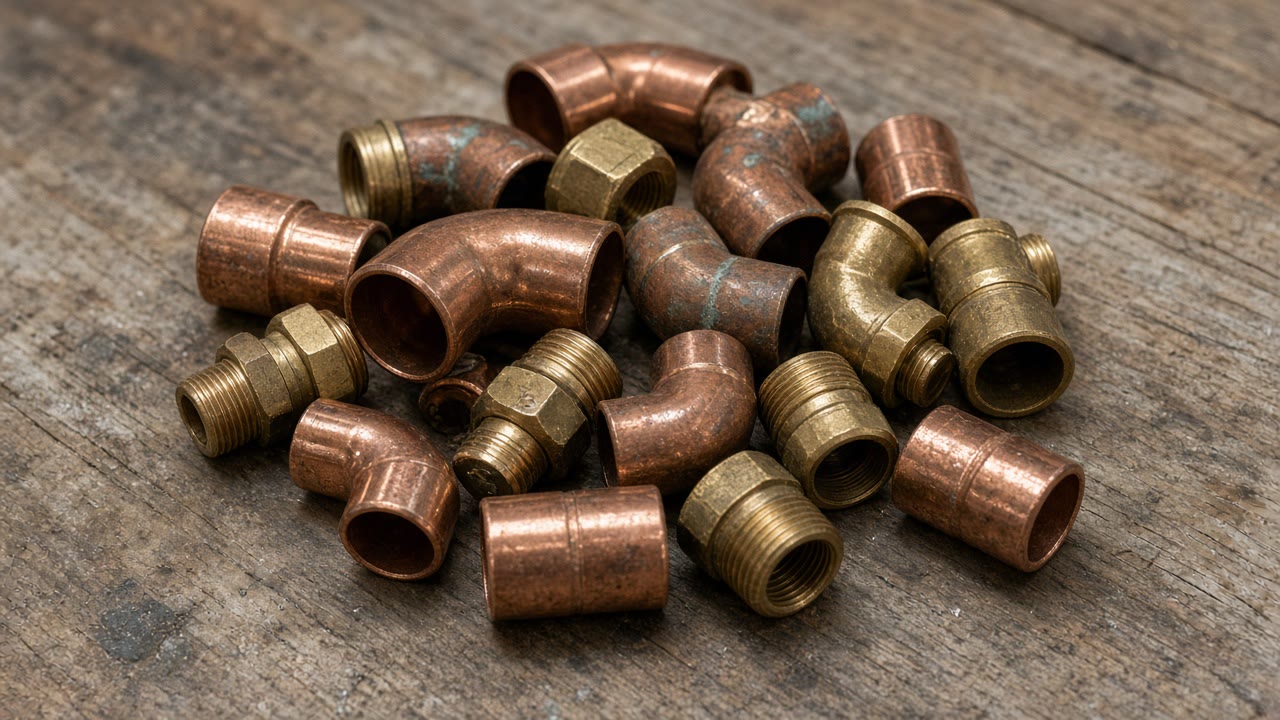
American Community Survey 2020 to 2024 five year estimates give the Village of Camillus a median year of construction of 1958 with 248 of 771 units, or 32.2 percent, built in 1939 or earlier, while the surrounding town of Camillus has a median of 1966 with only 696 of 11,481 units, or 6.1 percent, built in 1939 or earlier. Within the town, the Fairmount area has a median of 1961 and 5.0 percent pre 1940.
Source: US Census Bureau, accessed 2026-09-13
The New York State Lead Service Line Inventory records 485 service lines under the locality Village of Camillus with 79 galvanized requiring replacement, 3 lead, 262 non lead and 141 unknown, and 9,325 under Town of Camillus with 102 galvanized requiring replacement, 3 lead, 1,882 non lead and 7,338 unknown. At 16.3 percent, the village has one of the highest galvanized rates in the metro, while the surrounding town is at about 1 percent. OCWA's source table gives both the village and the town as Otisco Lake only.
Source: New York State Department of Health, accessed 2026-09-13
Section 5.4.H of the Onondaga County Requirements for Implementation states that where line pressure on service pipes exceeds 80 pounds per square inch gauge pressure in OCWA territory, an approved pressure reducing valve must be installed on the inlet side of the water meter. Section 5.4.G requires a valve on both sides of any water meter and requires meters to be located near the point of entry of the water service, along an exterior wall, and conveniently accessible for reading.
Source: Onondaga County Examining Board for Plumbers, accessed 2026-09-13
Section 305.4 of the Plumbing Code of New York State, headed Freezing, states that water, soil and waste pipes shall not be installed outside a building, in attics or crawl spaces, concealed in outside walls, or in any other place subject to freezing temperatures unless adequate provision is made to protect them by insulation or heat or both, and that exterior water supply system piping shall be installed not less than 6 inches below the frost line and not less than 12 inches below grade.
Source: UpCodes, publishing the Plumbing Code of New York State 2020, accessed 2026-09-13
Onondaga County Plumbing Control states that the only instance where a plumbing permit is not required is where a fixture such as a faucet or shower head is replaced with one that has the same flow rating as the original, and lists the repair or replacement of a faucet, flush valve, supply tube, individual fixture stop, toilet fill valve or flushing mechanism that is in kind to what you currently have as not requiring a permit.
Source: Onondaga County Department of Water Environment Protection, accessed 2026-09-13
Two Camillus housing profiles a mile apart
The Village of Camillus has a median year of construction of 1958 with 248 of its 771 units, 32.2 percent, built in 1939 or earlier. The surrounding town has a median of 1966 with only 696 of 11,481 units, 6.1 percent, from before 1940, and Fairmount sits at 1961. Those are different building eras and they predict different pipe. Advice that fits the village core is wrong in the town, which is why a repiping conversation here starts with the address rather than with the symptom.
Whether original supply pipe is even the likely cause
Inside the village, where a third of the homes predate 1940, original galvanized runs are an age appropriate assumption and the service line record agrees, with 16.3 percent of village lines marked galvanized requiring replacement. In the town, where only one home in sixteen predates 1940 and the galvanized rate at the curb is about 1 percent, a supply complaint is much more likely a fixture, a stop or a pressure problem than the pipe in the walls. That difference is worth knowing before anyone quotes a whole house.
Check incoming pressure before opening anything
Where line pressure exceeds 80 pounds per square inch in OCWA territory a pressure reducing valve is required on the inlet side of the meter. A gauge on a hose bib is a few dollars and explains banging pipes, weeping joints and short fixture lives without any pipe being replaced.
Partial scopes work well in postwar houses
Where a bathroom was redone in the nineties, that branch is already copper. The runs worth costing are the originals plus whatever the newer work ties into, and in a 1958 or 1966 house that is usually a fraction of the whole.
Keep supply pipe out of exterior walls
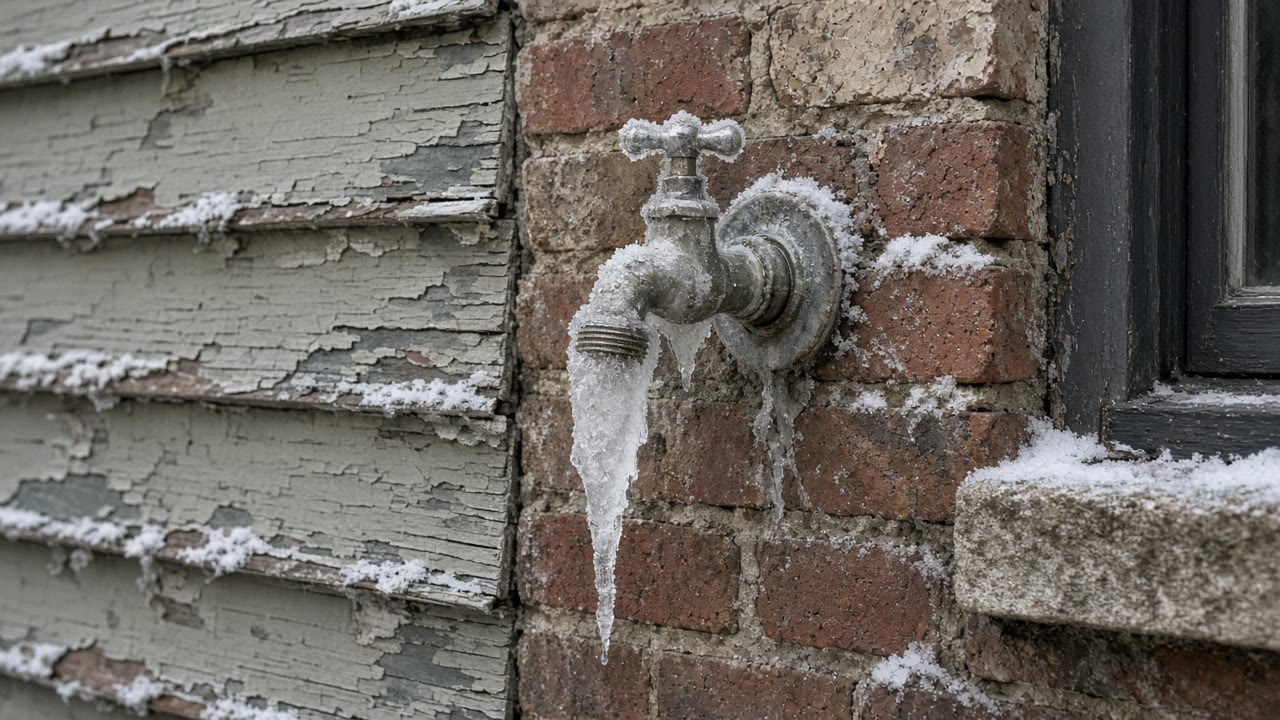
The state plumbing code says pipe shall not be installed outside a building, in attics or crawl spaces, concealed in outside walls or anywhere subject to freezing unless protected. Rerouting a run out of a cold wall during a repipe is the part that never shows and matters most in February.
Village core, or out in the town?
Send the Camillus address and we will tell you what the record says about your street before anyone prices work.
Other work we arrange in Camillus
Repiping questions from Camillus homeowners
My neighbor a mile away was told they needed a repipe. Does that apply to me?
Possibly not, and Camillus is the place in this metro where that question has the sharpest answer. The village has a median build year of 1958 with 32.2 percent of homes from 1939 or earlier, while the town has a median of 1966 with 6.1 percent pre 1940, and the service line records track the same split at 16.3 percent galvanized inside the village against about 1 percent outside it. A recommendation that is sound on a village street can be simply wrong three minutes' drive away, so the address genuinely matters more than the anecdote.
What should I check before paying for a repiping quote?
Three things, and all of them are cheap. Unscrew the aerator on the fixture that complains and rinse the screen, because a blocked screen mimics a pipe problem and the county treats that in kind replacement as work needing no permit. Put a pressure gauge on an outside hose bib, since anything over 80 pounds per square inch in OCWA territory should have a pressure reducing valve on the inlet side of the meter. Then compare flow at the worst fixture against pressure at the bib, because the gap between those two numbers is the real diagnosis.
Tell us what the water is doing in your Camillus home
Flow that faded, rust in the morning, or pressure that bangs. Each one points somewhere different.