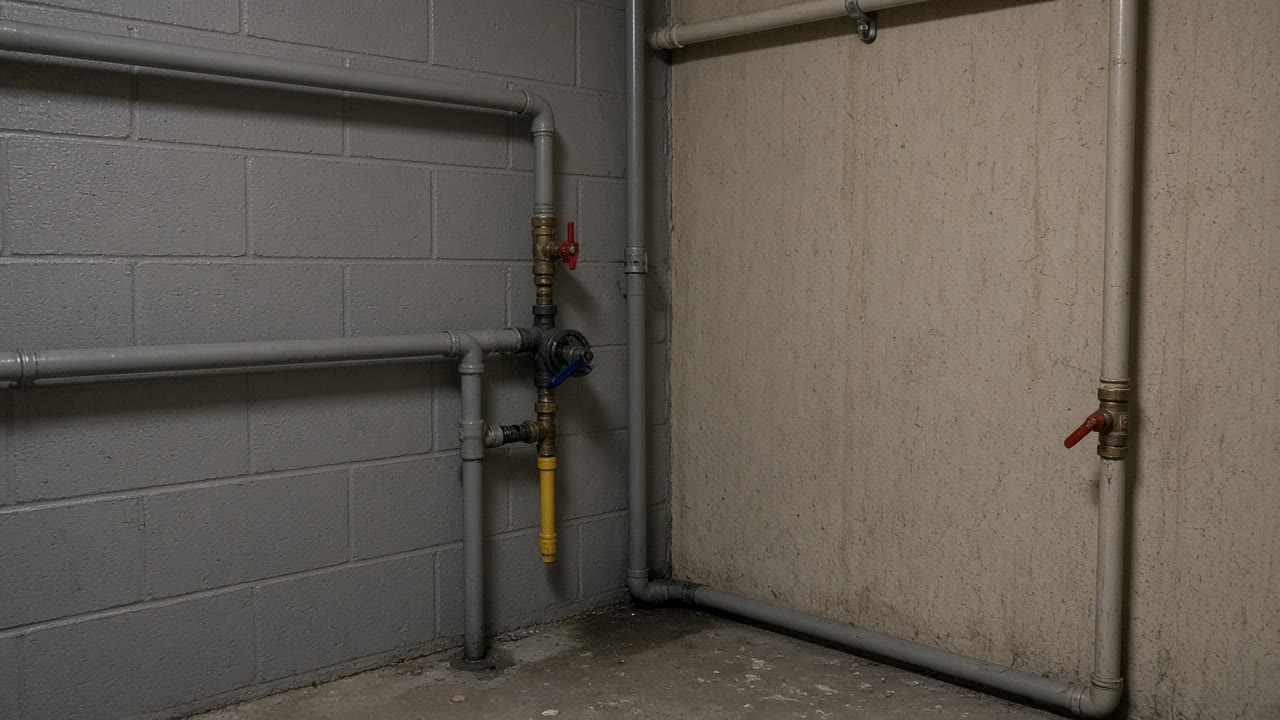
Two pipes meet at the edge of your property, and each one has a different owner. Knowing the split tells you who to call and who pays when water goes missing.
Water reaches a Syracuse house through a single buried pipe called the service line. It runs from the water main under the street, past a small valve near the curb, through the foundation, to a meter in the basement. Ownership of that pipe changes partway along, and the point where it changes depends on where you live.
Inside the City of Syracuse
The city's Department of Water divides each service into three parts. The first is the main out to the curb box, the shutoff near the road, and that stretch is the city's. The second is the pipe from the curb box to the meter in your basement, and that belongs to you. The third is the meter itself, which belongs to the city. The city adds that you are responsible for the valves and fittings on either side of the meter.
In practice this means that a wet patch of lawn on the street side of the little lid in the sidewalk is a call to the city, while a leak on the house side is a plumbing job you arrange and pay for.
Outside the city: Onondaga County Water Authority
In the villages and towns around Syracuse, most homes are served by Onondaga County Water Authority. The authority describes its side as the line from its main to the shutoff valve at your property line, with you responsible from the outlet side of that valve to the meter or main shutoff inside the house, plus every pipe and fixture beyond it. Its FAQ words it differently: the authority owns only the meter and its remote reader, all piping including the shutoff valves belongs to the owner, and the owner is responsible for the lines from the house to the road. Because the two statements differ, ask the authority where your own boundary sits before you rely on either.
The city also sells water to parts of Camillus, DeWitt, Geddes, Salina and Onondaga, so the town name alone does not tell you who supplies your water. Check the bill or ask the supplier if you are not sure.
Why the curb stop is not yours to turn
It is tempting to crank the valve at the street when something goes wrong. The authority's customer rules say the curb stop is operated only by its own staff, and tampering with a service connection can lead to the service being discontinued. Use the main shutoff inside the house, then call the supplier. Before a planned repair, you can ask the authority to close the water at the road while the plumber works, and it is smart to arrange that ahead of the visit.
The two valves the rules expect in your basement
The authority's customer rules call for two shutoff valves at your expense: one just inside the building wall and one beside the meter on the outlet side. They are how a plumber isolates the house, and how the meter can be removed without draining the building. If yours are missing or seized, replacing them is a sensible first step.
What the split means for a repair
- A leak before your boundary is the supplier's concern.
- A leak after it is yours, including the buried stretch under your lawn or driveway.
- Under OCWA's customer rules, a meter damaged by freezing or hot water is repaired or replaced at the customer's cost.
- Replacing your own lead or steel section falls to you, though a city program can bill it to the tax bill. See the guide on lead service lines.
Who can do the buried work
Onondaga County's homeowner permit conditions bar homeowners from doing any plumbing work outside the house, and they name water services as an example. So the buried part of your line is work for a licensed plumber. Ask the contractor which license covers your address, and confirm it with the county plumbing permit office.
Records that help
Keep the closing documents and any past plumbing receipts. A sketch of where the pipe enters the basement, the meter and both shutoffs, plus a phone photo of each, saves a contractor time and gives you something to compare against the supplier's records. If a prior owner replaced part of the line, the permit record may show it.
Questions to ask before anyone digs
- Where exactly does my side begin?
- Is the permit in the name of the plumber doing the work, and who gives the supplier notice?
- How deep will the new pipe sit, and how will the lawn or paving be restored?
- Is a section being replaced, or the whole private stretch?
Source City of Syracuse Department of Water and Onondaga County Water Authority, read Oct 5, 2026.