
Syracuse and the surrounding New York area
Leak Detection and Burst Pipe Repair Across the Syracuse Area
Find water that is escaping where you cannot see it, or stop a pipe that has already burst, and understand what made it happen here.
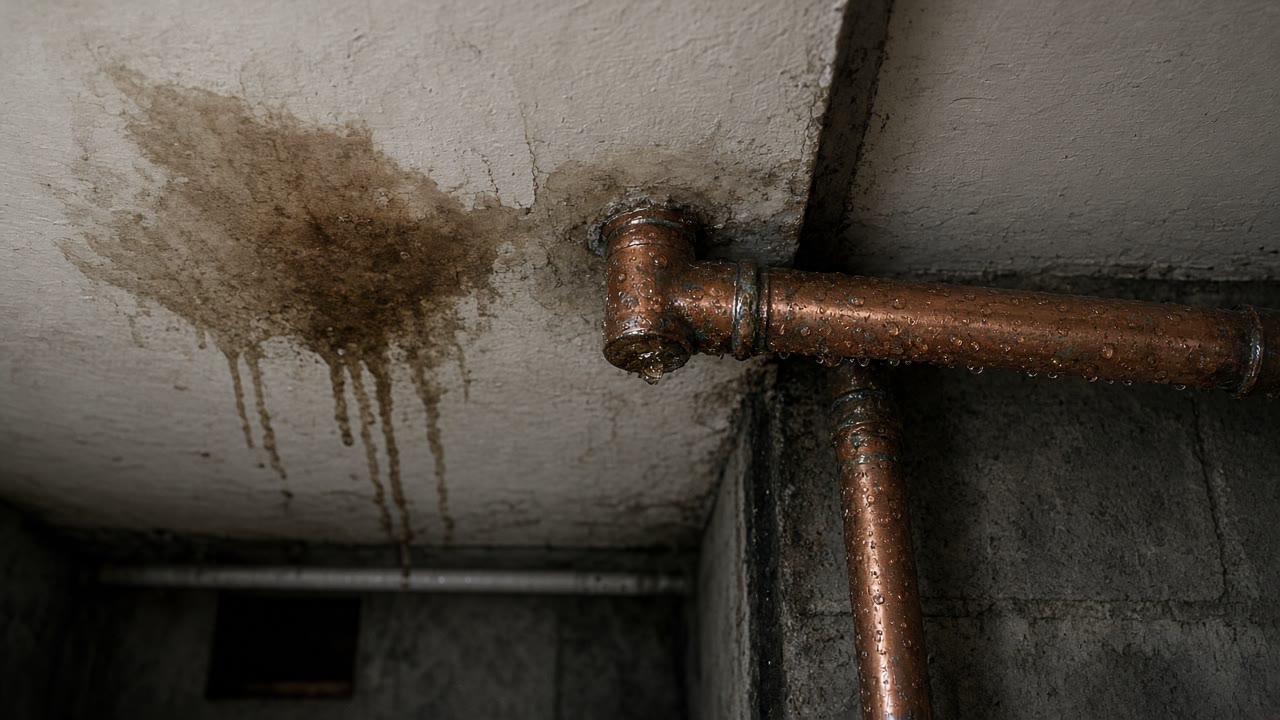
Leak Detection quote
Tell us what you can see and when it started, because a leak found early is a smaller repair than the same leak in March. Describe it and we will put you in front of licensed, insured contractors who find the cause before they open anything up.
Would you rather talk it through? Call (315) 640-3590, answered 24/7.
$100 off your first job
Credited by us on your first booked job.
- One credit per customer per property, on your first booked job.
- Valid through December 31, 2026.
Mention this offer when you book. Full terms.
Finding water that is not where it should be
This is the work of finding water that is going somewhere it should not, and stopping it. Three situations bring people to it: a bill that jumped with nothing visible, damp with no obvious source, and a pipe that split in a cold snap. The last one is the local specialty. Half the city's water main breaks fall in four winter months, which is the same ground movement that finds a shallow service line, and the county has written down that insulating a shallow pipe does not prevent it freezing here, because a line carrying little flow generates no heat of its own. Inside the house the state code is equally specific about where supply pipe should not run: outside walls, attics, crawl spaces, anywhere subject to freezing, unless it is protected. A leak has a cause, and the cause is usually a place rather than a piece of pipe.
- Tracing a leak you cannot see, from the meter back through the house
- Burst supply pipe repair after a freeze, including a run that split behind a finished wall
- Thawing a frozen line, and deciding whether it then needs depth or heat rather than wrapping
- Under slab and behind wall supply leaks
- Pinhole leaks in copper and weeping compression joints
- Hose bibs and frost proof sillcocks that split over winter
- Toilet and fixture leaks, found with the dye test the water authority publishes
- A relief valve discharge that is running when nothing is calling for hot water
- Frozen and split meters, which the water authority repairs or replaces at the customer's expense
- Emergency isolation at the two customer owned indoor valves
- Winterizing an empty or seasonal property, and the meter decision that goes with it
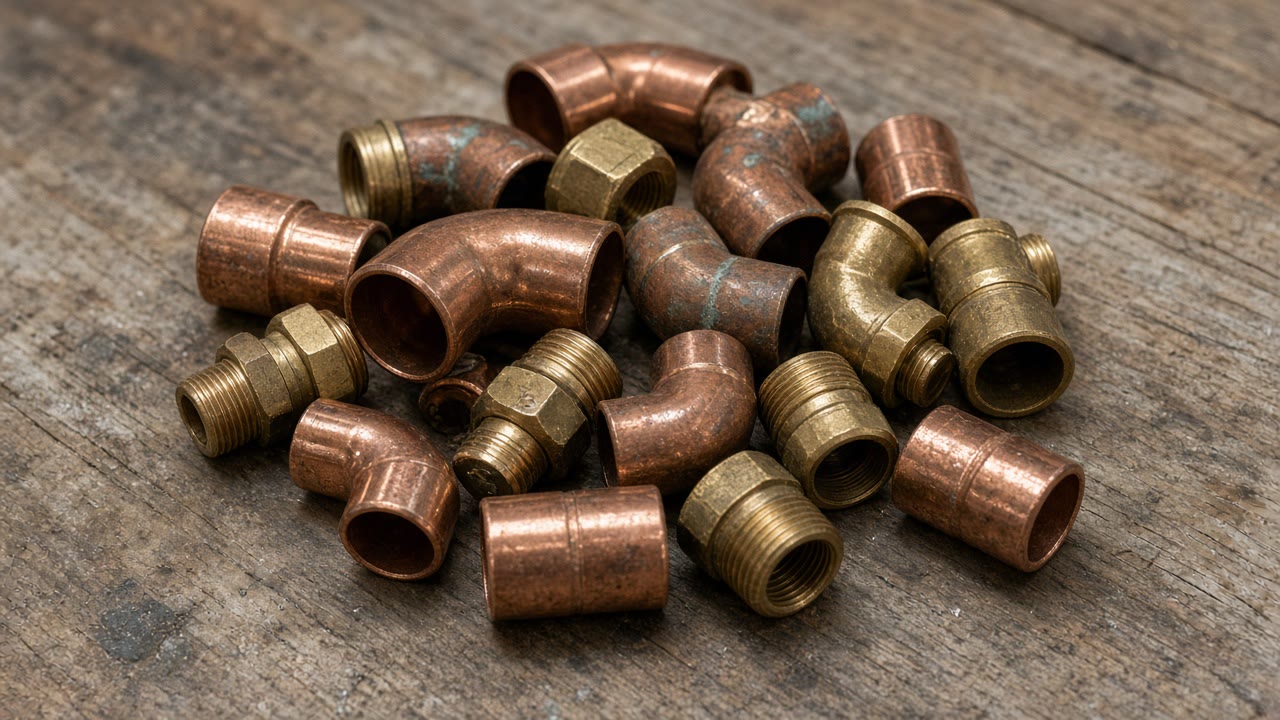
What decides how a leak gets found
Finding the water is usually cheaper than reaching it. What moves this job is where the pipe runs, what is on top of or in front of it, and whether the answer is inside the foundation or under the yard.
Whether any water is arriving at all
No water in the house in January and water everywhere are opposite problems with opposite urgency. A total stoppage in a cold snap points at a freeze, at the service line or at a run in an unheated space, and the useful checks are whether the neighbors have water and whether one fixture works. Water arriving normally while the meter spins points at something escaping between the meter and a fixture, which is a search rather than a rescue.
The month, and what the ground has been doing
Winter is not evenly dangerous. The city's own break records, grouped by month, give 424 breaks in January, 420 in February, 305 in December and 281 in March against 161 in October, so 47 percent of breaks fall in a third of the year. NOAA's normals give 46.8 days a year on which the temperature never rises above freezing. Snow cover actually insulates the ground, which is why the dangerous winter for a buried line is a cold one with plowed, bare or salted ground over the pipe rather than simply a snowy one.
Where the pipe runs
Section 305.4 of the Plumbing Code of New York State says water pipes shall not be installed outside a building, in attics or crawl spaces, concealed in outside walls, or in any place subject to freezing, unless protected by insulation or heat or both. Most of the burst pipes in this metro are in exactly those places. It matters for the repair as well as the diagnosis, because a pipe that froze once in an exterior wall will do it again unless it moves or the space around it changes.
What the meter says with everything turned off
The meter is the cheapest leak detector in the house and it is already installed. A dial that moves with every fixture closed proves water is escaping somewhere between the meter and the taps. The reason to chase it the same week is that the sewer charge here is calculated from metered water at 1.25 dollars per 100 cubic feet, so a running toilet or a weeping supply line is billed twice on the same gallon.
Whether it is a leak at all in July
Summer damp is often condensation. NOAA's normals give a mean July dew point of 61.1 degrees here, with the 90th percentile hourly dew point averaging 69.1, and the water inside the pipe comes from Skaneateles Lake, Otisco Lake or Lake Ontario, all of which run well below that. Any cold surface below about 61 degrees pulls water out of ordinary July air with no leak anywhere. A basement drip that appears in July and disappears in October is the season, not the plumbing.
Whether the fault is inside the foundation or under the yard
This is the line that changes the whole job. Inside, a repair is an interior repair with access and making good. Outside, it is an excavation with a county permit, and Plumbing Control states that emergency work may proceed with the permit obtained on the first business day after, but that nothing may be covered, backfilled or concealed before an inspection. So a buried repair is open until an inspector has seen it, by rule, whatever the weather is doing.
How long it has been running, and what it has reached
A slow leak into a joist bay or under a slab does damage that the plumbing invoice does not cover. Central New York gets 127.8 inches of snow in a normal year and long cold spells, so a house that was empty over a winter can have been leaking for months. The plumbing repair is usually the smaller half of that situation, and knowing what else got wet before the repair starts is how the rest of it gets handled properly.
Is the meter moving with everything off?
That one check decides whether this is a leak in your house or something else entirely.
The order a leak gets chased in
Stop the water at a valve you own
OCWA's customer rules require two customer owned shutoff valves, the first no more than 12 inches inside the building wall and the second on the outlet side of the meter. The first one is the emergency valve and it is worth finding and labeling before you need it. What not to do is go outside for the curb box: section 4.4 reserves that valve to an employee of the authority, and an old curb stop snapped off in the box turns a repair into an excavation that is now your responsibility.
Rule out the street before you rule out the house
The City of Syracuse takes emergency calls on 315-448-8360 and OCWA answers after hours on 315-475-7601, and establishing whose water it is costs nothing. About 200 main breaks a year are recorded in the city, and if the neighbors have no water either, or everyone's water came back brown at once, the answer is outside your property line.
Read the meter with everything off
Close every fixture, read the meter, wait, read it again. Movement proves a leak downstream of the meter and no movement sends the search back to the street or to condensation. It is a fifteen minute test that decides whether anyone needs to come at all.
Dye test the toilets
OCWA publishes the method: lift the tank lid, put a few drops of food coloring in the tank, wait about 45 minutes, and look in the bowl. Color in the bowl means the toilet is emptying and refilling itself, and the flapper is the likely cause. That single test explains most bills that jumped for no visible reason, and it costs the price of a bottle of food coloring.
Narrow it down inside the house
Isolating sections and watching the meter, listening at fixtures and at the main, and checking the obvious suspects in order: the relief discharge tube at the water heater, the supply stops under sinks, the braided appliance lines, and any run that passes through an unheated space. In summer the first question is still whether the wet pipe is a cold line sweating rather than a line leaking.
Repair, and where it is buried, leave the trench open
Emergency work can proceed before the permit in this county, with the permit obtained on the first business day following. What cannot happen is backfilling: the county requires that work is not covered, backfilled or concealed before Plumbing Control has inspected it. A contractor who fills the hole the same night has made the repair uninspectable and left the problem with the property rather than with themselves.
Disinfect the repaired line before the house drinks from it
The county requires parts of an existing potable system that have been altered, extended or repaired to be disinfected before use. On a repair done in a hurry this is the step most likely to be skipped, and it is a reasonable thing to ask about once the water is back on.
Deal with the reason it froze
A thawed pipe is not a solved pipe. The county cautions that insulation board over a shallow line does not prevent freezing in Onondaga County, because a line with little or no flow has no self heating effect. Depth or heat, not wrapping. Where the answer is depth, the minimum cover for a domestic water service here is 54 inches, and that is service line work rather than a repair.
What leak detection looks like
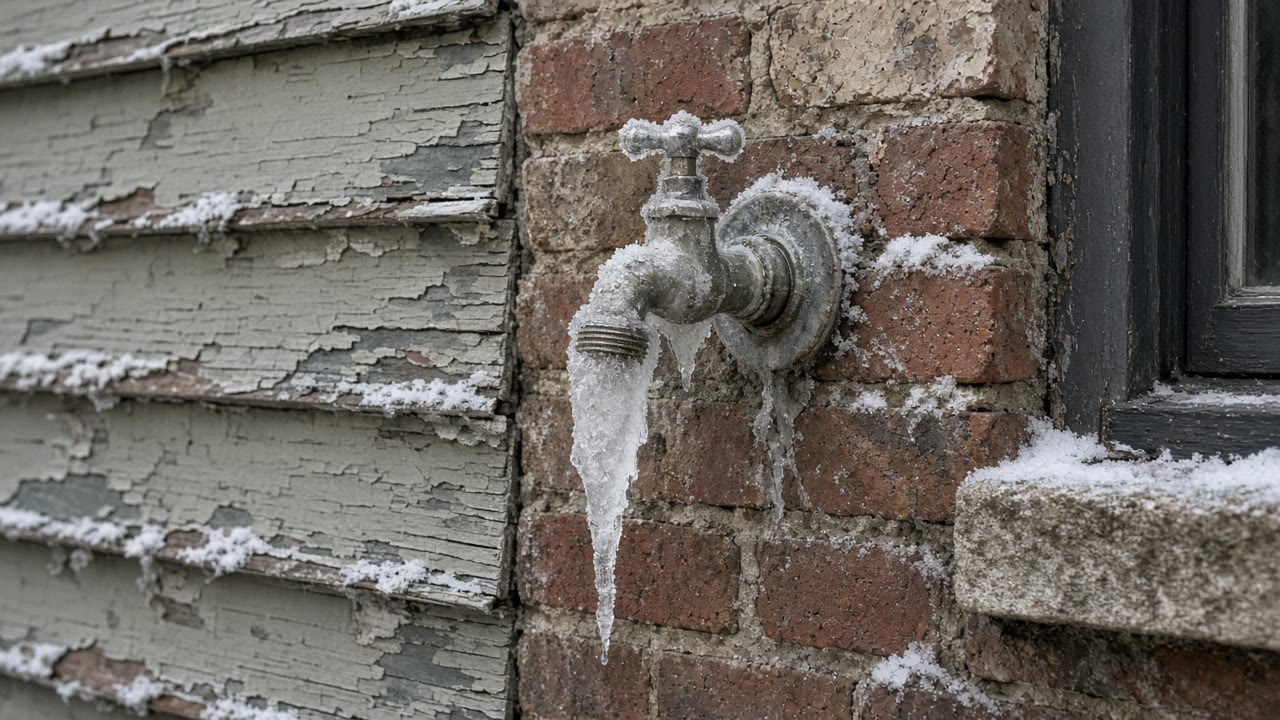

What gets chased here, and what belongs to another trade
When you may not need this at all
- A bill that jumped with nothing visible is a toilet more often than a pipe. OCWA's published test is a few drops of food coloring in the tank, 45 minutes, then look in the bowl. If it shows, the part is a flapper and it costs a few dollars. Do that before paying anyone to search the house.
- A basement drip that only appears in summer is usually condensation. The mean July dew point here is 61.1 degrees and the water in the pipe comes from a lake that runs colder, so a cold supply line sweats in ordinary July air with nothing wrong anywhere. Check whether the wet pipe is a cold line and whether it dries up in October.
- If the neighbors have no water either, or the whole street's water came back brown at once, it is the main rather than your house. About 200 breaks a year are recorded in the city and 47 percent of them fall between December and March.
- Water surfacing in the tree lawn on the street side of the curb box is the water purveyor's to chase, not yours. The City takes emergency calls on 315-448-8360 and OCWA on 315-455-7061, and making that call first is what stops somebody paying to excavate a public side leak.
- If a house is going to sit unheated this winter, the cheapest repair is the one that never happens. OCWA advises removing the meter where there will be no heat in the dwelling, because a meter damaged by freezing is repaired or replaced at the customer's expense, there is no quarterly fee while it is out, and 70 dollars puts it back.
- Water on a ceiling under a roof, a chimney or a bathroom above is not automatically plumbing. If the meter does not move with everything off, the supply system is not the source and the money is better spent on the building than on a plumber.
What is out of scope
- Blocked drains and water coming up rather than out. That is a different pipe with a different diagnosis behind it, and it is arranged separately.
- Roof, gutter, flashing, window and wall leaks, which are building repairs rather than plumbing repairs.
- Drying, dehumidification and mold remediation after a burst, which are separate trades with their own licensing rules in New York.
- Groundwater in a basement, sump pumps and foundation drainage.
- Internal faults in washing machines and dishwashers beyond the supply stop and the hose feeding them.
- Insurance claim handling, adjuster reporting and damage estimating.
- Anything on the street side of the curb stop or the property line valve, which belongs to the City of Syracuse or to OCWA.
Leak and burst pipe work, town by town
Questions about leaks, freezing and burst pipes
My water stopped in January and the neighbors are fine. What is it?
That pattern points at your own pipe rather than the main, and usually at depth or at an unheated space. Minimum cover for a domestic water service in Onondaga County is 54 inches, and a line installed shallow decades ago, or exposed later by a regraded driveway or an excavation, sits above the frost. A plowed, bare or salted driveway over the pipe makes it worse, because snow cover insulates the ground and bare ground lets the frost drive down. Inside the house the same logic applies to any run in a crawl space or an exterior wall.
Can I shut the water off at the curb box myself?
No. Section 4.4 of OCWA's customer rules states that the curb stop may not be used by the customer and is to be operated exclusively by an employee of the authority, and section 9.1 lists tampering with authority equipment as grounds for discontinuing service. There is a practical reason as well as a rule: an old curb stop snapped off in the box turns a repair into an excavation in the tree lawn, and under the customer rules you are the one who broke it. Use the valve inside the wall instead.
My water bill doubled. Where do I start?
With the meter and a bottle of food coloring. Close everything, read the meter, wait and read it again, and if it has moved something is escaping. Then dye test the toilets using OCWA's method: a few drops in the tank, 45 minutes, look in the bowl. It is worth chasing the same week, because the sewer charge here is billed on metered water at 1.25 dollars per 100 cubic feet, so every gallon a running toilet wastes is billed to you twice.
Why can the trench not be filled in the same evening?
Because Onondaga County does not permit it. Plumbing Control allows emergency work to proceed with the permit obtained on the first business day afterward, but states that work cannot be covered, backfilled or concealed before an inspection is done. An open hole overnight is the rule working. A hole filled before the inspector sees it has to be reopened, and the cost of that lands on the property rather than on whoever filled it.
Will insulating the pipe stop it freezing?
Not on its own, and the county has written that down. Section 5.5 of the county requirements cautions designers that insulation board over shallow lines carrying little flow is not effective in Onondaga County, because a line with little or no flow has no self heating effect and insulation does not prevent freezing. The state code says the same thing differently: a pipe in a place subject to freezing needs insulation or heat or both, and exterior supply piping needs to be below the frost line. For a buried line the answer is depth.
Who pays if the meter freezes?
You do. OCWA's customer rules state that meters remain the property of the authority and are maintained at its expense for ordinary wear and tear, but that the customer is responsible for damage due to freezing, hot water or other causes, and the authority repairs or replaces the meter at the customer's expense. That is why an unheated basement corner is worth a little heat, and why OCWA advises taking the meter out altogether if the house will be cold all winter.
Tell us what you are seeing
A bill that jumped, a damp patch, or no water at all. Each one starts in a different place.