Old lead pipe is still buried under many Syracuse streets and yards. This guide explains what is known, what is not, and what a homeowner can do.
Lead pipe was commonly used for water service lines in older cities, and Syracuse is one. Federal rules are changing how fast water systems must find and replace lead service lines.
What the city's inventory shows
The state health department's summary for the City of Syracuse, dated October 2024, lists 38,601 service lines. As of that October 2024 summary, 22,503 have been identified, including 17,239 lead lines, 48 galvanized lines needing replacement and 5,216 non lead lines. A further 16,098 are still unknown. The split by side tells you more. On the public side, which the city owns, 14,538 are recorded as lead. On the customer side, 6,180 are lead and 25,526 are unknown. Most private pipes are still unidentified.
That gap is the blind spot. The records for the city side come largely from historical documents. The customer side has been identified only by field inspection, and most customer side lines are still unknown.
How to find out what your pipe is made of
The city published a citywide service line inventory in October 2024 and offers an address lookup. Outside the city, Onondaga County Water Authority has an inventory map, and its 2024 report points customers with a confirmed lead service line to a one time water test, so ask it for the details. Where the record is unknown, the authority asks for photos of the pipe where it enters the building.
The federal rule as published
EPA says its Lead and Copper Rule Improvements, finalized in October 2024, require water systems to find and replace lead pipes within 10 years and to test drinking water more rigorously. The rule text lowers the lead action level from 15 to 10 parts per billion and sets November 1, 2027 as the date by which community water systems must comply. Check the current text of the rule before relying on that date.
Who replaces what
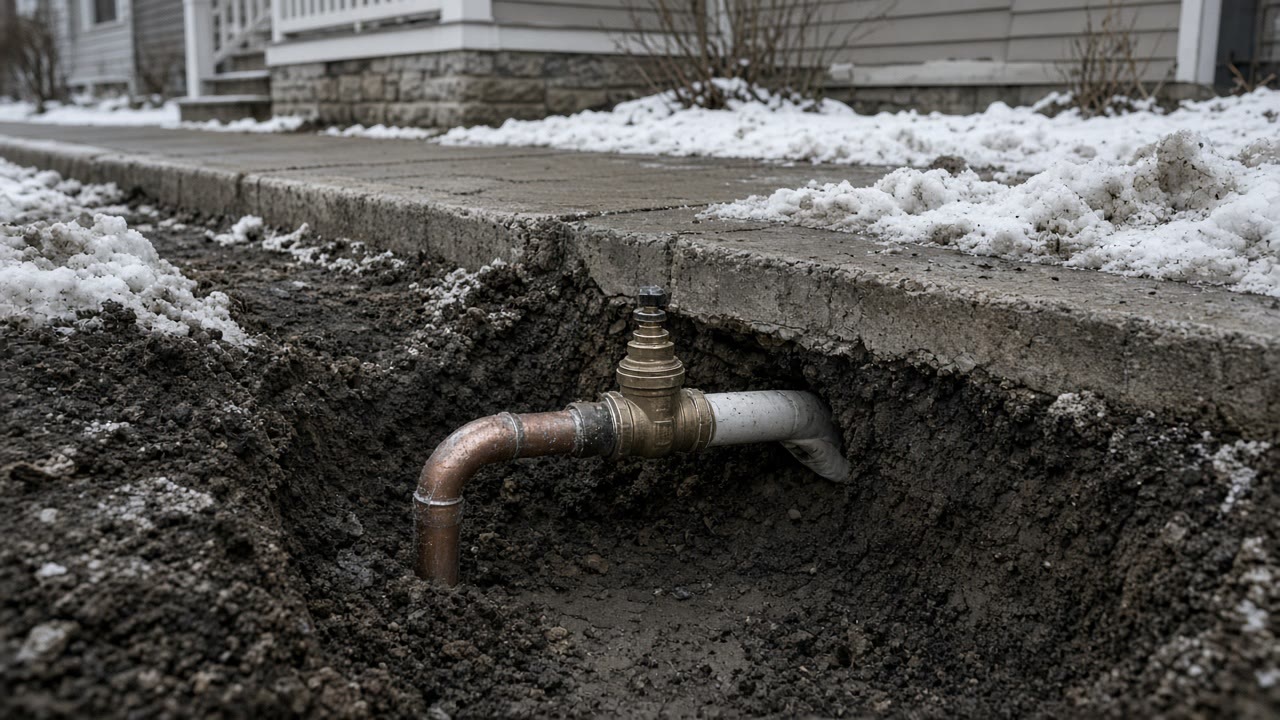
The city says it will replace the private side lead services at about 2,900 homes citywide this year, on a strategy page that carries no date, starting with the areas that have the oldest housing. A homeowner who wants to act sooner has two routes. You can hire your own licensed plumber, who takes out the permit in their own name and does the work. Or you can use the city's program, in which the city hires a plumber and the cost goes on your property tax bill, either in one sum or over ten years at 7 percent a year, according to the city's 2024 water quality report. The report notes the first route may be cheaper and faster.
The city's water department application aid says it will replace the public side once you can show the private side has been replaced. Proof can be a water department basement inspection, a licensed plumber's inspection or a receipt, and the department inspects privately done work before the trench is backfilled. That document is dated 2023, so confirm the current program with the water department.
Outside the city, the authority is replacing its own portion of lead lines. It says it has no funding right now for customer side replacements. It asks owners planning to replace their part to call it so its records stay current.
Until the pipe is replaced
- The city advises cold water only for drinking, cooking and baby formula.
- Boiling does not remove lead.
- Flush the tap before drinking.
- Clean the faucet aerator.
- If you buy a filter, choose one made for lead removal, and do not run hot water through it.
A realistic way to plan it
Start with the lookup for your address. If the line is lead or unknown, take a photo of the pipe at the basement wall and ask the supplier how it can confirm the material. Then collect a quote, ask how the dig and the permit are handled and decide between paying a plumber directly or using the city's tax bill route. Replacing the private side first is also what the city's application aid ties its replacement of its own side to.
Lead is not only the service line
EPA notes that brass or chrome plated brass faucets and lead solder are the most common problem in homes without a lead service line, and that homes built before 1986 are more likely to have lead plumbing. Replacing old fixtures is a smaller job than a service line.
Planning the replacement
A private lead line replacement is a digging job done by a licensed plumber, so it follows the water service line rules in the ownership guide. Get the quote in writing and ask who coordinates with the city or authority.
Source New York State Department of Health and US Environmental Protection Agency, read Oct 5, 2026.