
Onondaga County
Plumbing in Liverpool, Where a New Faucet Will Not Fix It
Before you replace another fixture in a Liverpool house, it is worth finding out whether the supply pipe itself is closing up. At 16.4 percent, this Onondaga County village has the highest share of galvanized service lines needing replacement of any village in the metro, and half its housing was built before 1940.
Request a quote in Liverpool
Share a few details so we can confirm coverage and arrange the right next step.
Would you rather talk it through? Call (315) 640-3590, answered 24/7.
$100 off your first job
Credited by us on your first booked job.
- One credit per customer per property, on your first booked job.
- Valid through December 31, 2026.
Mention this offer when you book. Full terms.
What the Liverpool inventory says about village supply pipe
The New York State Lead Service Line Inventory records 1,193 service lines under the locality Village of Liverpool: 196 galvanized requiring replacement, 2 lead, 147 non lead and 848 unknown. That is 16.4 percent of all records classified as galvanized requiring replacement, the highest rate of any village in the Syracuse metro. In 108 of those 196 the public side is already copper.
Source: New York State Department of Health, accessed 2026-09-13
American Community Survey 2020 to 2024 five year estimates give the Village of Liverpool a median year of construction of 1938. Of 1,344 housing units, 675, or 50.2 percent, were built in 1939 or earlier, 60.4 percent before 1950, and 1,194, or 88.8 percent, before 1980.
Source: US Census Bureau, accessed 2026-09-13
The New York State Department of Health summary of the lead service line inventory for OCWA, public water system NY3304336, records 117,156 service lines, of which 415 are lead, 3,956 are galvanized requiring replacement, 54,407 are non lead and 58,378 are unknown. Of the 415 lead lines, 399 are on the customer side and 22 on the public side, and of the galvanized lines 3,958 are recorded on the customer side against 99 on the public side.
Source: New York State Department of Health, accessed 2026-09-13
OCWA advises that customers with dirty, discolored or rusty water should run one cold water faucet for 10 to 15 minutes until it clears, and explicitly not run the hot water first, so that discolored water is kept out of the hot water tank. It recommends removing screens, filters or aerators from the faucet being flushed, or flushing a cold bathtub tap instead, and says that after a main break or maintenance work a cold tap should be run for 15 to 30 minutes.
Source: Onondaga County Water Authority, accessed 2026-09-13
Weak flow upstairs in a Liverpool house?
Tell us which taps are affected and whether hot and cold behave the same. That one distinction usually separates pipe from fixture.
Why Liverpool flow problems sit upstream of the tap
Of 1,193 service lines recorded under Village of Liverpool, 196 are galvanized requiring replacement. That is 16.4 percent, the highest rate of any village in this metro, and in 108 of those the public half is already copper. Galvanized requiring replacement is not a cosmetic label: it means the pipe was once fed by lead and now has to go, and it corrodes inward until the bore is a fraction of what it started as. That is the shape of the usual Liverpool complaint. Flow that faded over two decades, worst at the furthest fixture, unchanged by a new faucet. Half the village predates 1940, so the interior piping is frequently the same story as the service line. The wider pattern says the same thing in a different material: of the 415 lead lines OCWA knows about across its whole system, 399 are on the customer side, because the utility half has largely been dealt with and what remains is the homeowner's pipe. One practical step before concluding anything about rusty water. Run a cold tap, not the hot one, for ten to fifteen minutes with the aerator off. Running the hot first pulls the sediment into your water heater, where it settles and stays.
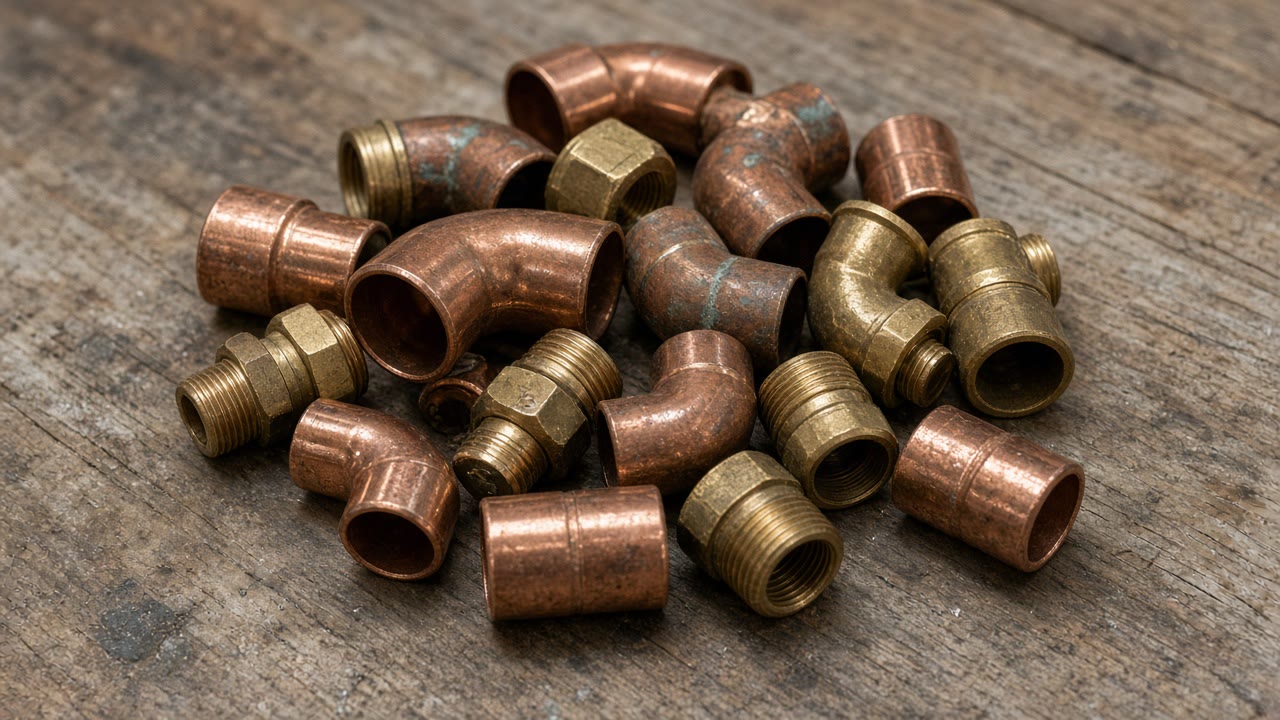
Plumbing work we arrange in Liverpool village
Water Service Line Repair and Replacement
Find out whether the pipe carrying water into your house has failed, which side of the curb stop it failed on, and what replacing your half of it actually involves here.
Water Service Lines in Liverpool →Repiping and Supply Pipe Replacement
Work out whether the supply piping inside your house has narrowed or corroded enough to replace, and how much of it actually needs to go.
Repiping in Liverpool →Water Heater Repair and Replacement
Decide whether the heater in your basement is worth repairing or has reached the end, and understand what a compliant replacement includes in this county.
Water Heaters in Liverpool →Fixture, Faucet and Valve Repair
Get a dripping faucet, a running toilet or a seized shutoff dealt with, and know which of them you could reasonably do yourself.
Fixtures and Valves in Liverpool →Tell us what the water is doing in Liverpool
Rusty first draw, thin shower, a faucet that was replaced and changed nothing: describe it and there is no obligation either way.