
Repiping a Liverpool House Where Half the Village Predates 1940
Flow that faded over twenty years, worst at the furthest tap, unchanged by a new faucet. That is the Liverpool complaint, and it has a cause.
Repiping quote in Liverpool
Share a few details so we can confirm coverage and arrange the right next step.
Would you rather talk it through? Call (315) 640-3590, answered 24/7.
$100 off your first job
Credited by us on your first booked job.
- One credit per customer per property, on your first booked job.
- Valid through December 31, 2026.
Mention this offer when you book. Full terms.
Liverpool build years set against the village pipe record
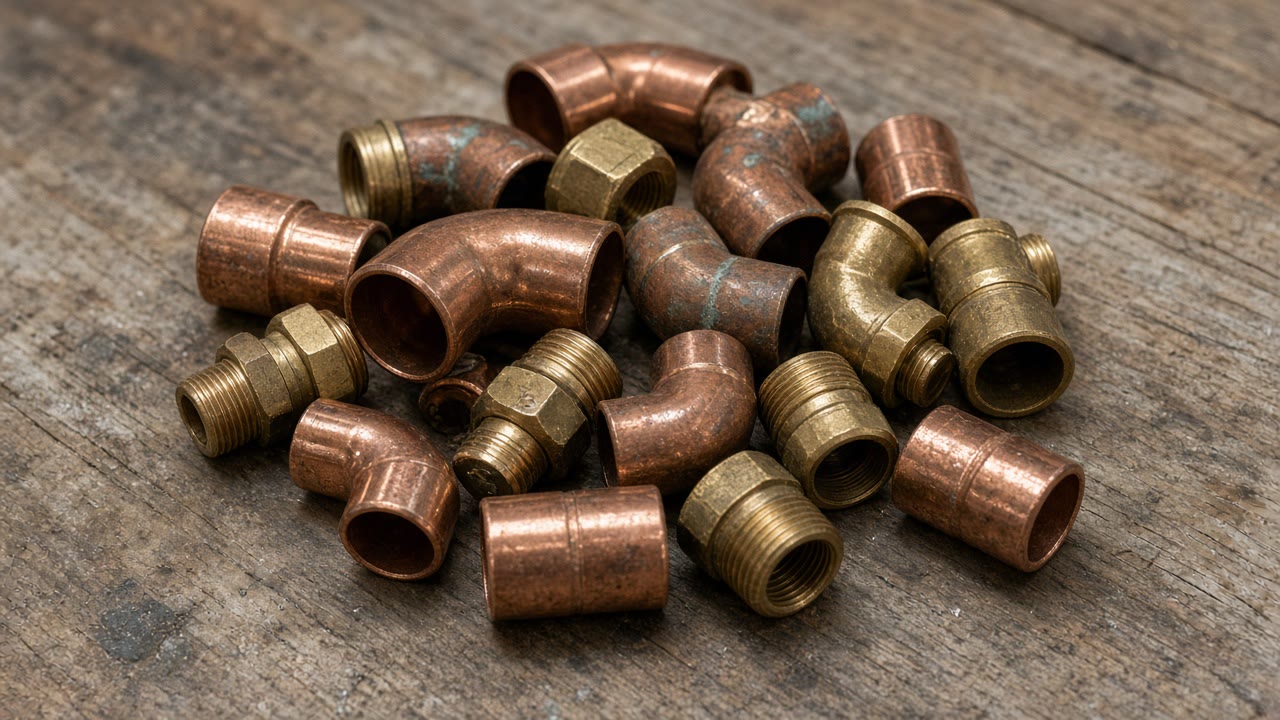
American Community Survey 2020 to 2024 five year estimates give the Village of Liverpool a median year of construction of 1938. Of 1,344 housing units, 675, or 50.2 percent, were built in 1939 or earlier, 60.4 percent before 1950, and 1,194, or 88.8 percent, before 1980.
Source: US Census Bureau, accessed 2026-09-13
The New York State Lead Service Line Inventory records 1,193 service lines under the locality Village of Liverpool: 196 galvanized requiring replacement, 2 lead, 147 non lead and 848 unknown. That is 16.4 percent of all records classified as galvanized requiring replacement, the highest rate of any village in the Syracuse metro. In 108 of those 196 the public side is already copper.
Source: New York State Department of Health, accessed 2026-09-13
OCWA advises that customers with dirty, discolored or rusty water should run one cold water faucet for 10 to 15 minutes until it clears, and explicitly not run the hot water first, so that discolored water is kept out of the hot water tank. It recommends removing screens, filters or aerators from the faucet being flushed, or flushing a cold bathtub tap instead, and says that after a main break or maintenance work a cold tap should be run for 15 to 30 minutes.
Source: Onondaga County Water Authority, accessed 2026-09-13
Section 305.4 of the Plumbing Code of New York State, headed Freezing, states that water, soil and waste pipes shall not be installed outside a building, in attics or crawl spaces, concealed in outside walls, or in any other place subject to freezing temperatures unless adequate provision is made to protect them by insulation or heat or both, and that exterior water supply system piping shall be installed not less than 6 inches below the frost line and not less than 12 inches below grade.
Source: UpCodes, publishing the Plumbing Code of New York State 2020, accessed 2026-09-13
Section 5.4.H of the Onondaga County Requirements for Implementation states that where line pressure on service pipes exceeds 80 pounds per square inch gauge pressure in OCWA territory, an approved pressure reducing valve must be installed on the inlet side of the water meter. Section 5.4.G requires a valve on both sides of any water meter and requires meters to be located near the point of entry of the water service, along an exterior wall, and conveniently accessible for reading.
Source: Onondaga County Examining Board for Plumbers, accessed 2026-09-13
The flow complaint that a new faucet never fixes
Half of Liverpool village was built before 1940, on a median year of construction of 1938, and 88.8 percent of its 1,344 housing units predate 1980. In houses of that age the supply piping inside the foundation wall is the same generation as the pipe outside it, and the village record shows what that generation was made of: 196 service lines classified galvanized requiring replacement, the highest village rate in the metro. Inside the wall, the same steel does the same thing, quietly, over decades.
Separating a pipe problem from a water problem
Before concluding anything about rusty water, run one cold tap for ten to fifteen minutes with the aerator removed until it clears, and do not run the hot first, because that pulls sediment into the water heater where it settles and stays. If the cold clears and stays clear, the street was the source. If it comes back rusty every morning after standing overnight, the corrosion is close to the tap and inside your own house. That distinction is free to make and it decides whether a repipe is the right purchase at all.
Pressure and flow are different measurements
Static pressure at a hose bib and flow at the fixture that complains are two numbers, and the gap between them is the diagnosis. Good pressure with poor flow is a bore that has closed up. Poor pressure everywhere points upstream at the service, the meter or a failed pressure reducing valve.
The curb record is a clue about the cellar
Where the pipe at the curb went in as galvanized steel, the horizontal main on the basement wall usually did too. In a village with the highest galvanized rate in the metro, a free public record is genuine evidence about the inside of your house.
Keep the new run in heated space
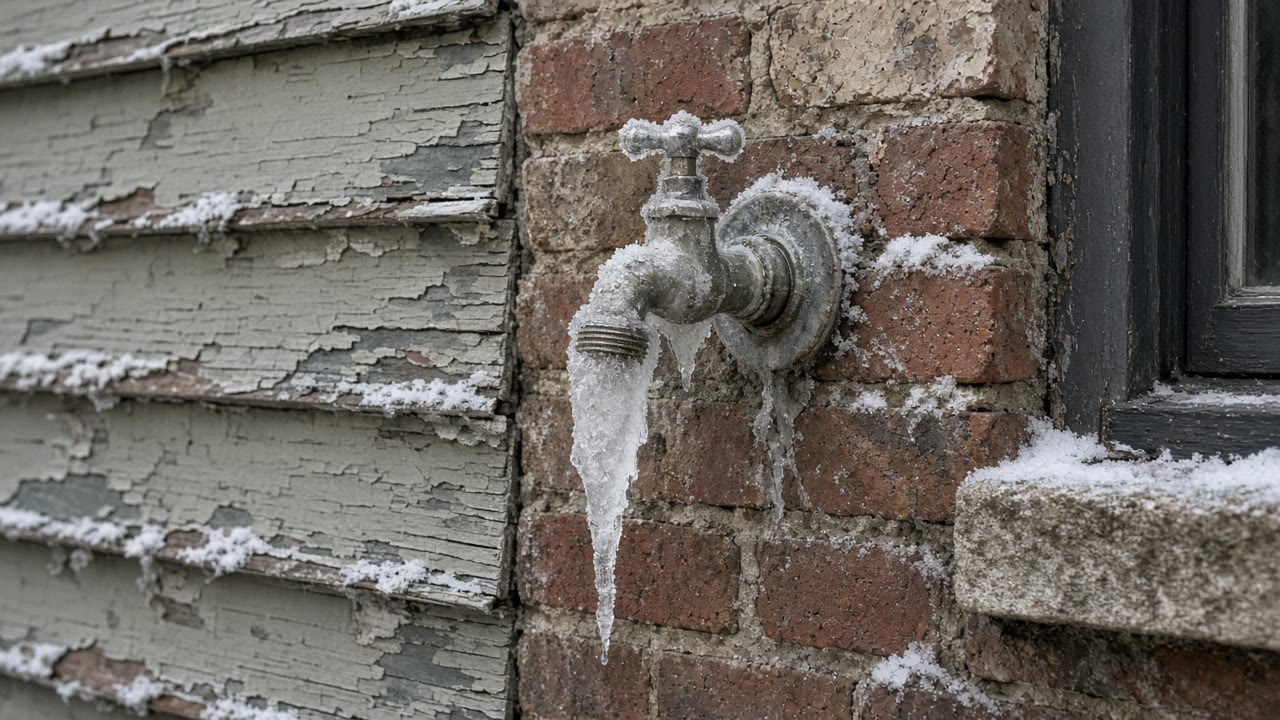
The state plumbing code says water pipe shall not be installed in attics, crawl spaces, concealed in outside walls or anywhere subject to freezing unless protected. Moving a run out of an exterior wall during a repipe costs almost nothing extra and removes a winter failure for good.
Does the cold clear after fifteen minutes?
That single test separates a street problem from a house problem. Tell us what happened.
Other work we arrange in Liverpool
Repiping questions from Liverpool homeowners
Will replacing the service line fix the brown water?
Only if the service line is the thing rusting. In a village with a 1938 median year of construction, the pipe on the basement wall and the risers above it are usually the same age as the pipe in the yard, so a new service delivers clean water into a corroded system and it arrives at the tap looking much the same. Liverpool has the highest galvanized rate of any village here at 16.4 percent of records. Look at both ends before paying for either, because the sequence changes what the second job costs.
Copper or PEX in an old village house?
Both are ordinary in this county and the arguments that matter locally are access and freezing rather than brochure claims. PEX pulls through finished walls with less opening up, which matters in a house with plaster and lath. Copper is easier to support and to modify later. What the state code actually cares about is not which you chose but where the run ends up, because pipe in an unheated crawl space or concealed in an outside wall is a code problem before it is a winter problem.
Tell us how the water behaves in your Liverpool home
Rusty in the morning, weak at the far tap, or fine downstairs and hopeless upstairs. Each points somewhere different.