
Repiping a Fayetteville House Before the Walls Close Again
One in five Fayetteville homes predates 1940, and the moment to settle what the pipe is made of is while something is already open.
Repiping quote in Fayetteville
Share a few details so we can confirm coverage and arrange the right next step.
Would you rather talk it through? Call (315) 640-3590, answered 24/7.
$100 off your first job
Credited by us on your first booked job.
- One credit per customer per property, on your first booked job.
- Valid through December 31, 2026.
Mention this offer when you book. Full terms.
Fayetteville build years against the village pipe record
American Community Survey 2020 to 2024 five year estimates give the Village of Fayetteville a median year of construction of 1961, with 434 of 2,092 housing units, or 20.7 percent, built in 1939 or earlier and 1,616, or 77.2 percent, before 1980. The New York State Lead Service Line Inventory records 1,865 service lines under Village of Fayetteville with 71 galvanized requiring replacement, 1 lead, 440 non lead and 1,353 unknown.
Source: US Census Bureau, accessed 2026-09-13
OCWA's 2024 water source table lists the Village of Fayetteville as Lake Ontario, one of only two Onondaga County villages given Lake Ontario as a single source, the other being the Village of Manlius. OCWA's Lake Ontario water is filtered, and the report states that after treatment orthophosphate is added for corrosion control to prevent the leaching of lead and copper.
Source: Onondaga County Water Authority, accessed 2026-09-13
EPA states that the Safe Drinking Water Act reduced the maximum allowable lead content that may be called lead free to a weighted average of 0.25 percent across the wetted surfaces of pipes, pipe fittings, plumbing fittings and fixtures, and 0.2 percent for solder and flux, and that lead pipes are more likely to be found in older cities and in homes built before 1986. Among homes without a lead service line, EPA says the most common problem is brass or chrome plated brass faucets and plumbing with lead solder.
Source: US Environmental Protection Agency, accessed 2026-09-13
Section 305.4 of the Plumbing Code of New York State, headed Freezing, states that water, soil and waste pipes shall not be installed outside a building, in attics or crawl spaces, concealed in outside walls, or in any other place subject to freezing temperatures unless adequate provision is made to protect them by insulation or heat or both, and that exterior water supply system piping shall be installed not less than 6 inches below the frost line and not less than 12 inches below grade.
Source: UpCodes, publishing the Plumbing Code of New York State 2020, accessed 2026-09-13
Section 2.8 of the county Requirements for Implementation makes the license holder responsible for sealing or patching any openings in walls, floors or ceilings resulting from an installation made by themselves or their employees, and exempts them from that responsibility only where a contractual arrangement exists under which the owner agrees to undertake the sealing and patching and provides that work before final inspection.
Source: Onondaga County Examining Board for Plumbers, accessed 2026-09-13
A 1961 village median with a prewar fifth underneath it
Fayetteville has a median year of construction of 1961, with 434 of its 2,092 housing units, 20.7 percent, built in 1939 or earlier and 77.2 percent before 1980. That mix is the interesting part: a majority of postwar houses where original supply pipe is a fair assumption, and a substantial prewar minority where galvanized steel and pre 1986 solder are the normal case. Which of those you own decides whether a repiping conversation is about flow, about lead solder, or about neither.
Establish the material, then decide the scope
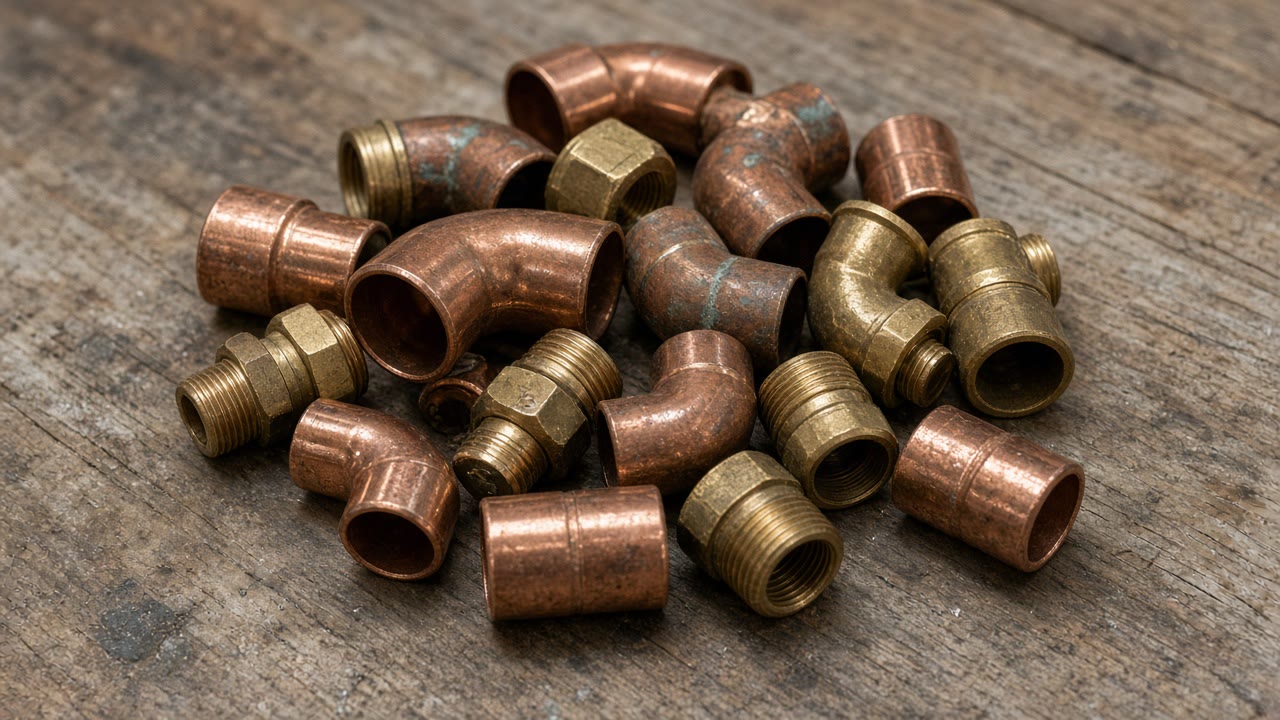
Look at the pipe where the service enters and the first few feet of the basement main, because that tells you the era directly and no useful scope exists until somebody has. Galvanized shows as good pressure at the hose bib with poor flow at the furthest fixture. Copper from before 1986 is a solder question rather than a pipe question, and lead free has never meant zero, it means a weighted average of 0.25 percent across the wetted surfaces. The second case is answered by a water test, which costs a fraction of opening a wall.
Partial scopes are usually the honest ones
A bathroom redone in the nineties is already copper and does not need doing twice. The runs worth costing are the originals plus whatever newer work ties into them, and that is normally the horizontal cellar main and one set of risers.
Route new pipe through heated space
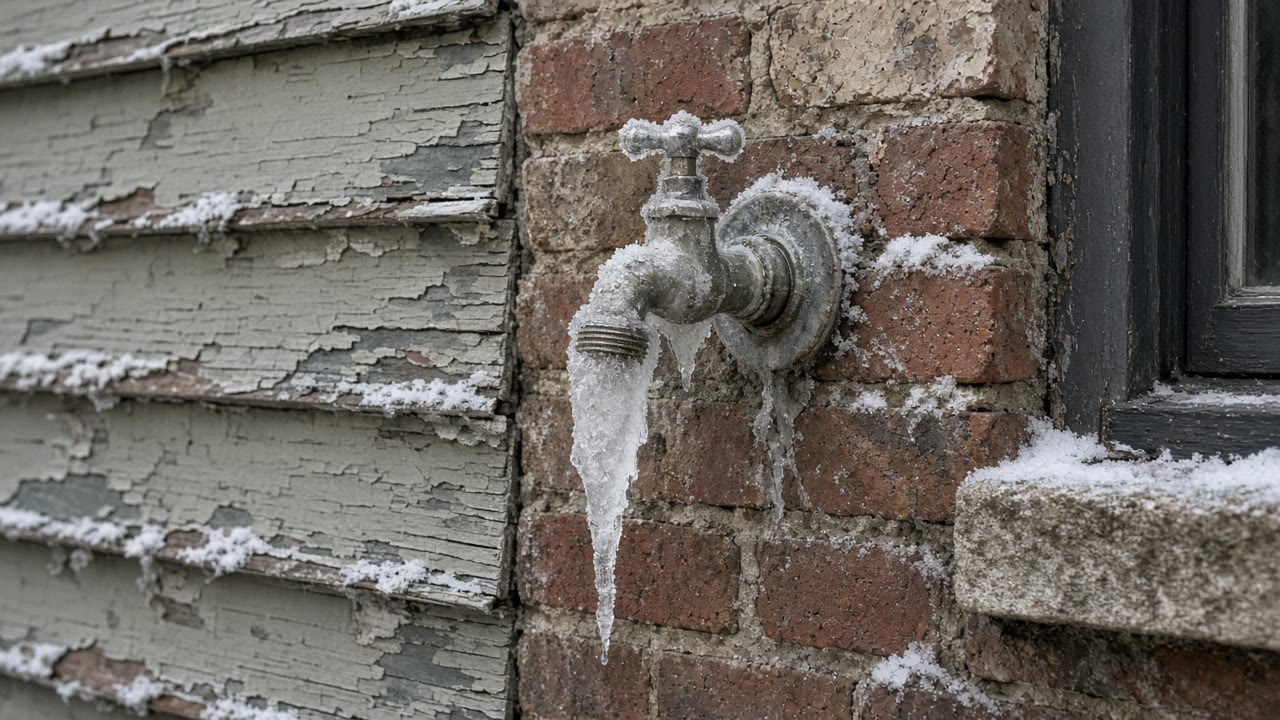
The state plumbing code says water pipe shall not be installed outside a building, in attics or crawl spaces, concealed in outside walls or anywhere subject to freezing unless protected. Moving a run while the wall is open costs very little and removes a winter failure permanently.
Settle who patches the openings, in writing
The county makes the license holder responsible for sealing and patching openings in walls, floors and ceilings left by their own installation, unless there is an arrangement that the owner will do it, provided before the final inspection.
Prewar house, or one of the postwar streets?
Send the Fayetteville address and roughly when it was built, and we will say what is likely behind the plaster.
Other work we arrange in Fayetteville
Repiping questions from Fayetteville homeowners
My water tastes and looks fine. Why would I repipe?
Usually you would not, and that is worth saying plainly. Repiping earns its cost when flow has genuinely faded, when the water runs rusty from the cold side throughout the house, or when opening the walls for another reason makes it cheap to do at the same time. Fayetteville water is filtered Lake Ontario water treated with orthophosphate for corrosion control, which protects the inside of existing pipe from leaching. If the flow is good and the water is clear, the honest answer is that the pipe is doing its job.
Is it worth repiping while we redo a bathroom?
Often yes, and it is the cheapest moment there will ever be. The cost of a repipe is mostly access rather than pipe, so work that has already opened a wall or a ceiling removes most of it. In a village where 20.7 percent of homes predate 1940 and 77.2 percent predate 1980, the original runs are frequently reachable only through finished surfaces. If a remodel is happening anyway, get the incoming service material confirmed at the same time, since the free identification route and the open wall rarely coincide twice.
Tell us what the water does in your Fayetteville home
Flow that faded, rust in the morning, or a remodel about to start. No obligation either way.